
Where the Little Kea Characters Came From
Little Kea is a Hawaii-born children's brand making books, shirts, and cards for keiki ages 2-4. We're a small family operation - AI-first by design, Hawaiian at heart. This post is part of an ongoing series about how we build Little Kea, why we chose to use AI, and what we think it means to raise kids in a world where this technology is just part of life. Learn more about us here.
Every character in Little Kea's Big Trucks came from somewhere real. That matters to us - maybe more than anything else about how the book was made.
Tutu's house started as a real estate listing. I'd been watching properties in Hilo for years, the way you watch a place you keep thinking you might end up. This plantation-era house came up - a little rough, a little weathered, the kind of place that's been through things and is still standing. That felt right. That became Tutu's house.
The car took longer to figure out. I kept going back and forth on it. Eventually I landed on an old red Volvo, something out of the seventies or eighties. Anyone who's spent time on the islands knows those cars - the ones that just keep going, that you see some auntie driving down a back road decades after they should have stopped running. That's what I was after. The look, not the brand.
Then there was the lei problem.
Every time I tried to prompt Tutu - Hawaiian grandmother, older woman, warm, local - Midjourney put a lei on her. Every single time. I couldn't get around it. That's what the model knew: Hawaiian grandma means lei. So she has a lei. It's not wrong, exactly. It's just what the technology could imagine at that point. I left it.
Mom is interesting. The original mom character - the one still in the book today - wasn't modeled after Sade. In those early versions of Midjourney, you couldn't feed in a reference photo. You just described what you wanted and took what came back. So mom is what the AI produced from my best description, in version one or two, when the software was still finding its feet. She's become her own character since.
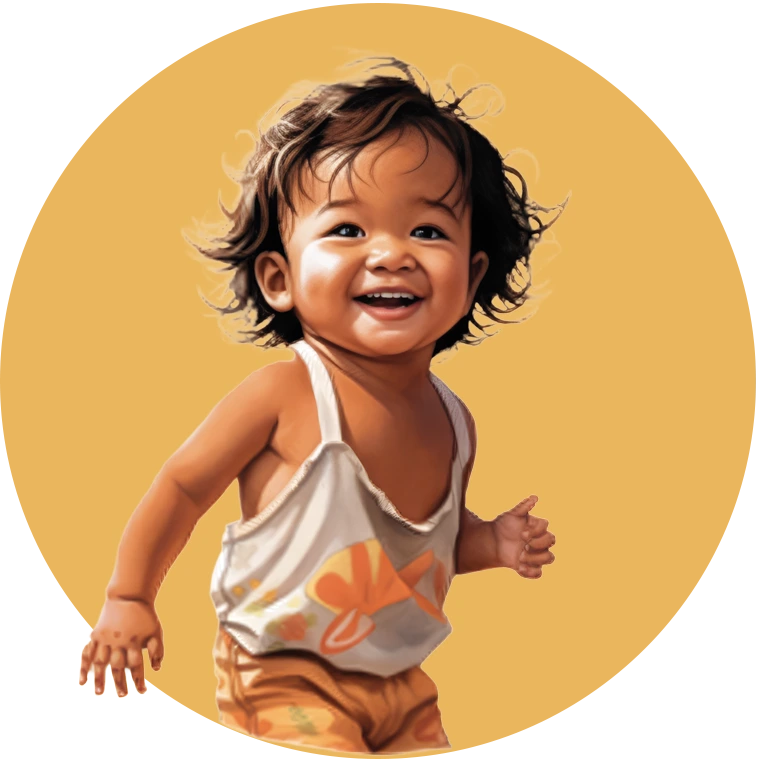
Kea came later, once Midjourney introduced character references. I had a photo from my Fuji camera - Rory in an aloha shirt, falling forward toward me. We were packing to leave Hawaii. One of those bittersweet afternoons. I fed that image in, and that became Kea. The little boy falling toward the camera, wearing the aloha shirt, caught right at that moment. That's the logo. That's the character across the pages.
The grandfather is modeled after Sade's grandfather - or what the AI could imagine of him from my description. The construction worker is her sister's husband. They don't necessarily look like themselves. But that's who I was thinking of when I was prompting.
The book is full of people we know, places we've loved, moments we were trying to hold onto. AI was how we got them onto the page. But they were always real.
See the full story in how we made a children's book on an iPhone, or grab a copy of the book and meet the characters yourself.